
Tarsal tunnel syndrome is the foot’s version of carpal tunnel: the tibial nerve is squeezed as it runs behind the inside of the ankle under a tight ligament. Patients feel burning, electricity, or numbness in the heel, arch, or toes (often at night) and many of them have already been treated for plantar fasciitis that never quite fit.
Millennium Podiatry looks for the nerve when the fascia story has holes in it.
A tunnel of bone and the flexor retinaculum on the inside of the ankle contains the tibial nerve and several tendons. Swelling, a flat foot that collapses into the tunnel, a cyst, varicose veins, or scar from an old sprain can crowd that space. The nerve complains.
It is a different disease from peripheral neuropathy, which is usually both feet, stocking-distribution, and metabolic. You can have both. We will not treat one and ignore the other.
Bottom-of-heel pain that is only mechanical first-step pain is still fascia until the nerve exam says otherwise.
History plus a nerve-focused exam. We tap the tunnel, check sensation, and look at foot posture. Ultrasound can show a cyst. Nerve studies help when we need to separate tunnel compression from neuropathy or a higher lesion. We do not order every test on every patient; we order the one that changes the plan.
Custom orthotics that support a collapsing arch are first-line when pronation is the engine.
Activity changes, anti-inflammatory measures, and treatment of whatever is occupying the space.
A carefully placed injection can be both treatment and a diagnostic test, if the nerve quiets, we have the right zip code.
Release of the retinaculum, and removal of a cyst if there is one, is for patients who stay symptomatic after a complete non-surgical plan, or who have a clear mass. Dr. Shalot performs that surgery. It is not a casual add-on.
Conservative care has no downtime. After a release, expect a short period of protected walking and then nerve recovery that can continue for months. Nerves are slow correspondents.
Evaluation typically $200–$500. Nerve studies and ultrasound, if needed, are additional. Orthotics and injections are quoted after the exam. Surgical release is a separate fee. We check insurance.
Sometimes people have both. Pure night-time burning is not fascia.
If we decompress it before it is badly damaged, usually yes. Long-standing numbness is more guarded.
When the diagnosis is uncertain or we are planning surgery. Not as a first reflex.
Tarsal tunnel syndrome is the foot’s version of carpal tunnel: the tibial nerve is squeezed as it runs behind the inside of the ankle under a tight ligament. Patients feel burning, electricity, or numbness in the heel, arch, or toes (often at night) and many of them have already been treated for plantar fasciitis that never quite fit.
Millennium Podiatry looks for the nerve when the fascia story has holes in it.

A tunnel of bone and the flexor retinaculum on the inside of the ankle contains the tibial nerve and several tendons. Swelling, a flat foot that collapses into the tunnel, a cyst, varicose veins, or scar from an old sprain can crowd that space. The nerve complains.
It is a different disease from peripheral neuropathy, which is usually both feet, stocking-distribution, and metabolic. You can have both. We will not treat one and ignore the other.
Bottom-of-heel pain that is only mechanical first-step pain is still fascia until the nerve exam says otherwise.

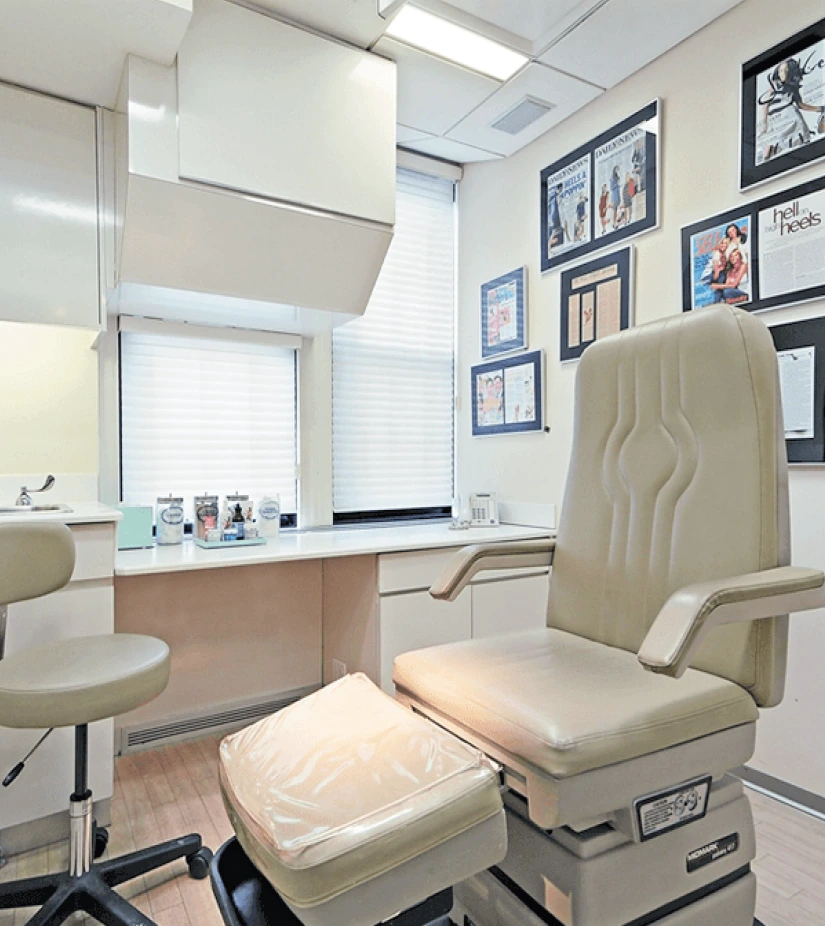
History plus a nerve-focused exam. We tap the tunnel, check sensation, and look at foot posture. Ultrasound can show a cyst. Nerve studies help when we need to separate tunnel compression from neuropathy or a higher lesion. We do not order every test on every patient; we order the one that changes the plan.
Custom orthotics that support a collapsing arch are first-line when pronation is the engine.
Activity changes, anti-inflammatory measures, and treatment of whatever is occupying the space.
A carefully placed injection can be both treatment and a diagnostic test, if the nerve quiets, we have the right zip code.
Release of the retinaculum, and removal of a cyst if there is one, is for patients who stay symptomatic after a complete non-surgical plan, or who have a clear mass. Dr. Shalot performs that surgery. It is not a casual add-on.
Conservative care has no downtime. After a release, expect a short period of protected walking and then nerve recovery that can continue for months. Nerves are slow correspondents.
Evaluation typically $200–$500. Nerve studies and ultrasound, if needed, are additional. Orthotics and injections are quoted after the exam. Surgical release is a separate fee. We check insurance.
Sometimes people have both. Pure night-time burning is not fascia.
If we decompress it before it is badly damaged, usually yes. Long-standing numbness is more guarded.
When the diagnosis is uncertain or we are planning surgery. Not as a first reflex.