
A plantar wart is not a callus, and treating it like one is how it spreads. These HPV growths grow into the sole of the foot, get covered by thick skin, and feel like you are standing on a pebble. At Millennium Podiatry we confirm the diagnosis, destroy the virus-bearing tissue, and protect the healthy skin around it, including on patients who care how the sole looks in sandals.
Plantar warts are benign skin growths on the bottom of the foot caused by human papillomavirus (HPV). Because you walk on them, they are pushed inward rather than sitting up like a wart on a hand. A dark-speckled core (tiny clotted capillaries) and interruption of the normal skin lines are the giveaways.
They are often confused with corns and calluses. A corn is a pressure problem. A wart is a virus. Pairing the wrong treatment with the wrong bump wastes months and can scar the sole.
HPV enters through tiny breaks in the skin. Locker rooms, pool decks, yoga studios, and shared showers are the usual New York sources. Damp socks, cracked heels, and a busy immune system that is ignoring the feet all help the virus take hold. Children and young adults get them most often; anyone can.
We look, we press, and we sometimes pare a thin layer of surface skin to see the dotted core. That 30-second step prevents treating a wart as a corn or a corn as a wart. If a lesion looks atypical, we biopsy. Patients with diabetes or poor circulation get a more conservative plan, no heroic kitchen-table acids.
We remove the overlying callus so medication or energy can reach the wart, not the armor it hid under.
Depending on the size, depth, and location we use medical-strength topical therapy, carefully applied acid treatments, or laser. The goal is to kill HPV-infected tissue and leave the weight-bearing fat pad alone.
Stubborn or mosaic warts sometimes need a plan that also asks the immune system to notice the virus. We will tell you if that is your situation rather than burning the same spot weekly forever.
We do not freeze a deep plantar wart the way a dermatologist freezes a hand wart and send you home hopping. The sole is different tissue.
Most patients walk out in regular shoes. Soreness is similar to a bruise for a few days. Mosaic or deep heel warts take more than one visit. We want a healed sole with normal skin lines; not a crater.
Simple single-wart treatment in NYC typically ranges $150–$500 per visit. Clusters, laser, and repeat visits for mosaic warts sit higher. We review insurance when the lesion is painful or interfering with walking.
Sometimes, over a year or more. Painful or spreading warts are not worth that wait.
No. The sole bleeds, scars, and gets infected more easily than people think.
Yes. Do not share files, pumice stones, or wet bathroom floors barefoot until we clear it.
Ordinary plantar warts are not. Unusual pigment, rapid change, or a lesion in a patient with poor immunity gets a biopsy; we do not guess.
A plantar wart is not a callus, and treating it like one is how it spreads. These HPV growths grow into the sole of the foot, get covered by thick skin, and feel like you are standing on a pebble. At Millennium Podiatry we confirm the diagnosis, destroy the virus-bearing tissue, and protect the healthy skin around it, including on patients who care how the sole looks in sandals.
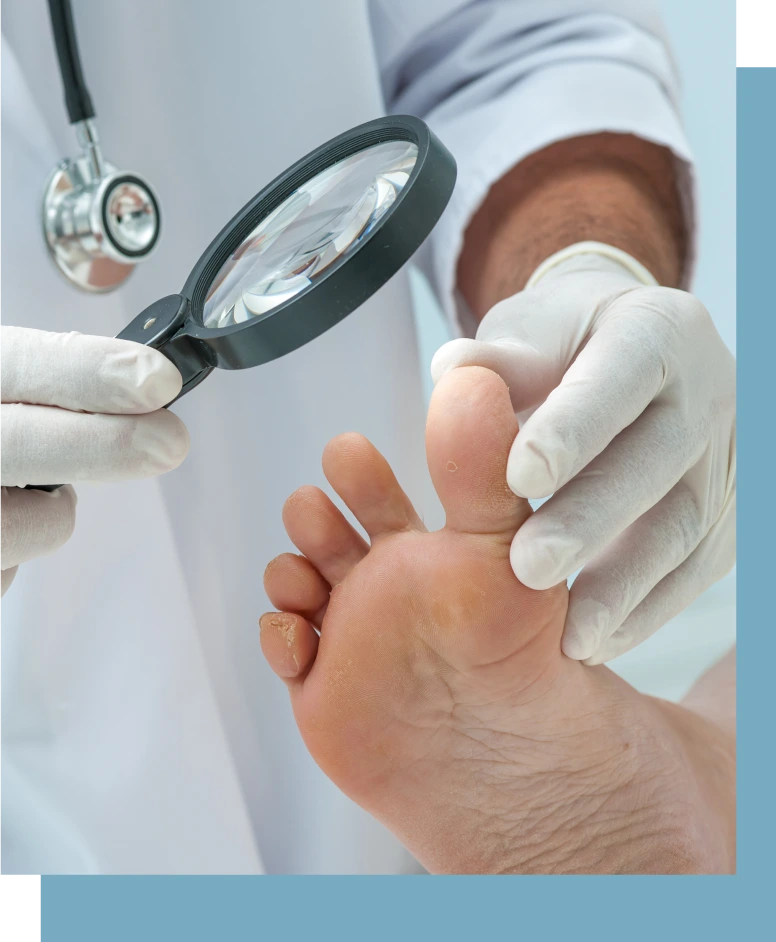
Plantar warts are benign skin growths on the bottom of the foot caused by human papillomavirus (HPV). Because you walk on them, they are pushed inward rather than sitting up like a wart on a hand. A dark-speckled core (tiny clotted capillaries) and interruption of the normal skin lines are the giveaways.
They are often confused with corns and calluses. A corn is a pressure problem. A wart is a virus. Pairing the wrong treatment with the wrong bump wastes months and can scar the sole.

HPV enters through tiny breaks in the skin. Locker rooms, pool decks, yoga studios, and shared showers are the usual New York sources. Damp socks, cracked heels, and a busy immune system that is ignoring the feet all help the virus take hold. Children and young adults get them most often; anyone can.
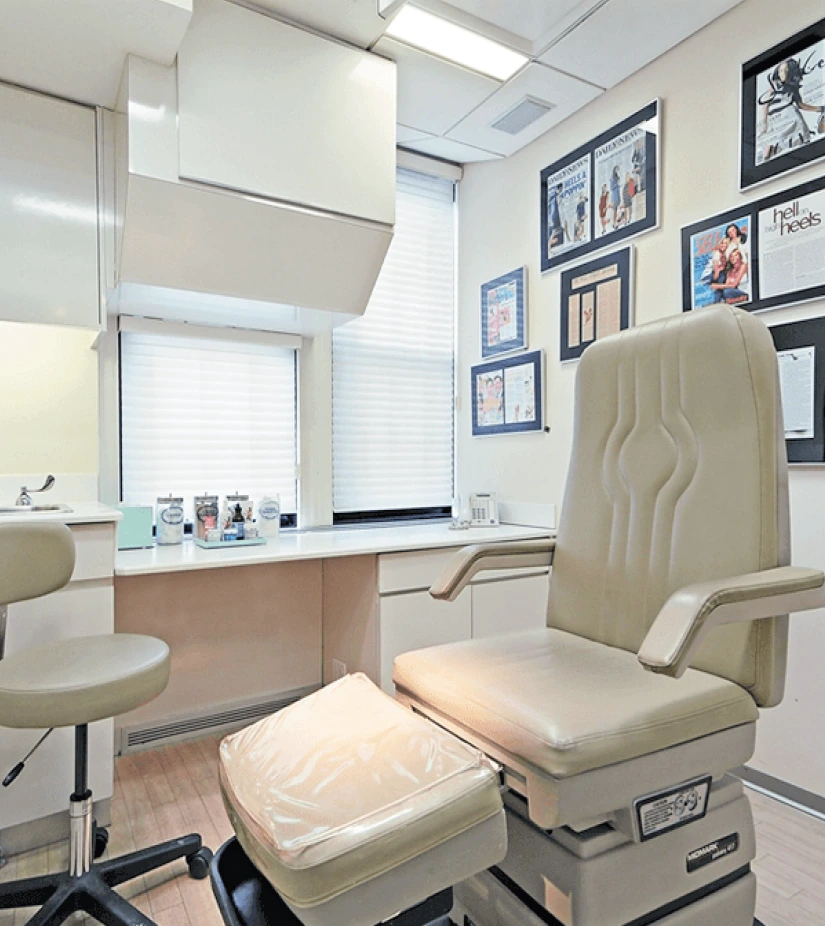
We look, we press, and we sometimes pare a thin layer of surface skin to see the dotted core. That 30-second step prevents treating a wart as a corn or a corn as a wart. If a lesion looks atypical, we biopsy. Patients with diabetes or poor circulation get a more conservative plan, no heroic kitchen-table acids.
We remove the overlying callus so medication or energy can reach the wart, not the armor it hid under.
Depending on the size, depth, and location we use medical-strength topical therapy, carefully applied acid treatments, or laser. The goal is to kill HPV-infected tissue and leave the weight-bearing fat pad alone.
Stubborn or mosaic warts sometimes need a plan that also asks the immune system to notice the virus. We will tell you if that is your situation rather than burning the same spot weekly forever.
We do not freeze a deep plantar wart the way a dermatologist freezes a hand wart and send you home hopping. The sole is different tissue.
Most patients walk out in regular shoes. Soreness is similar to a bruise for a few days. Mosaic or deep heel warts take more than one visit. We want a healed sole with normal skin lines; not a crater.
Simple single-wart treatment on the Upper East Side typically ranges $150–$500 per visit. Clusters, laser, and repeat visits for mosaic warts sit higher. We review insurance when the lesion is painful or interfering with walking.
Sometimes, over a year or more. Painful or spreading warts are not worth that wait.
No. The sole bleeds, scars, and gets infected more easily than people think.
Yes. Do not share files, pumice stones, or wet bathroom floors barefoot until we clear it.
Ordinary plantar warts are not. Unusual pigment, rapid change, or a lesion in a patient with poor immunity gets a biopsy; we do not guess.