
Hallux limitus is a stiff big toe. The joint at the base of the toe (the first metatarsophalangeal joint) no longer dorsiflexes the way a normal toe must in order to walk. You notice it in a dress shoe, on a hill, or when you try to rise onto the ball of the foot. Ignore it long enough and it becomes hallux rigidus, big-toe arthritis, where the joint is not limited. It is done.
Millennium Podiatry treats limitus early, while there is still cartilage and motion to save.
Hallux limitus is restricted upward motion of the big toe. A healthy first MTP joint needs roughly 60–70 degrees of dorsiflexion for a normal toe-off. When bone shape, a long first metatarsal, or early arthritis blocks that motion, the joint jams. Bone spurs form on the top of the joint. The toe starts to look like it has a bump, but the bump is on top, not on the side like a bunion.
Getting the name right changes the surgery, the shoe, and the injection.
We measure motion, feel for spurs, and watch how you toe off. X-rays show joint space, the shape of the metatarsal, and how far the arthritis has gone. That film is what tells us whether we are still in a limitus chapter or already in rigidus.
A stiffer-soled shoe and a custom orthotic with a Morton’s extension can reduce the jamming. This is unglamorous and effective.
Hyaluronic acid joint lubrication and carefully chosen injections can make a still-viable joint usable again. We do not grind a joint down with repeated cortisone.
Stem cell injections are considered when the cartilage is thinning but the joint is not bone-on-bone.
Dr. Shalot performs procedures that remove the blocking spur (cheilectomy) or shorten/realign a long first metatarsal so the toe can move again. Fusion is reserved for hallux rigidus, not for a joint we can still salvage.
Conservative care has no downtime. After a cheilectomy, most patients are in a surgical shoe for a short period and then back to a stiff-soled regular shoe. Osteotomy recovery is longer. We will not sell you a two-week miracle if the bone needs six.
Evaluation typically $150–$400. Orthotics, lubrication injections, and regenerative procedures are quoted after imaging. Surgical fees depend on whether we are removing a spur or realigning bone. We review insurance against the recommended plan.
Not if the toe is not drifting sideways. The bump location tells the story.
It is already a form of arthritis. The question is whether we can keep it from becoming rigidus.
Often yes, in a shoe with a stiffer forefoot and after we calm the joint. We will test that, not assume it.
Hallux limitus is a stiff big toe. The joint at the base of the toe (the first metatarsophalangeal joint) no longer dorsiflexes the way a normal toe must in order to walk. You notice it in a dress shoe, on a hill, or when you try to rise onto the ball of the foot. Ignore it long enough and it becomes hallux rigidus, big-toe arthritis, where the joint is not limited. It is done.
Millennium Podiatry treats limitus early, while there is still cartilage and motion to save.
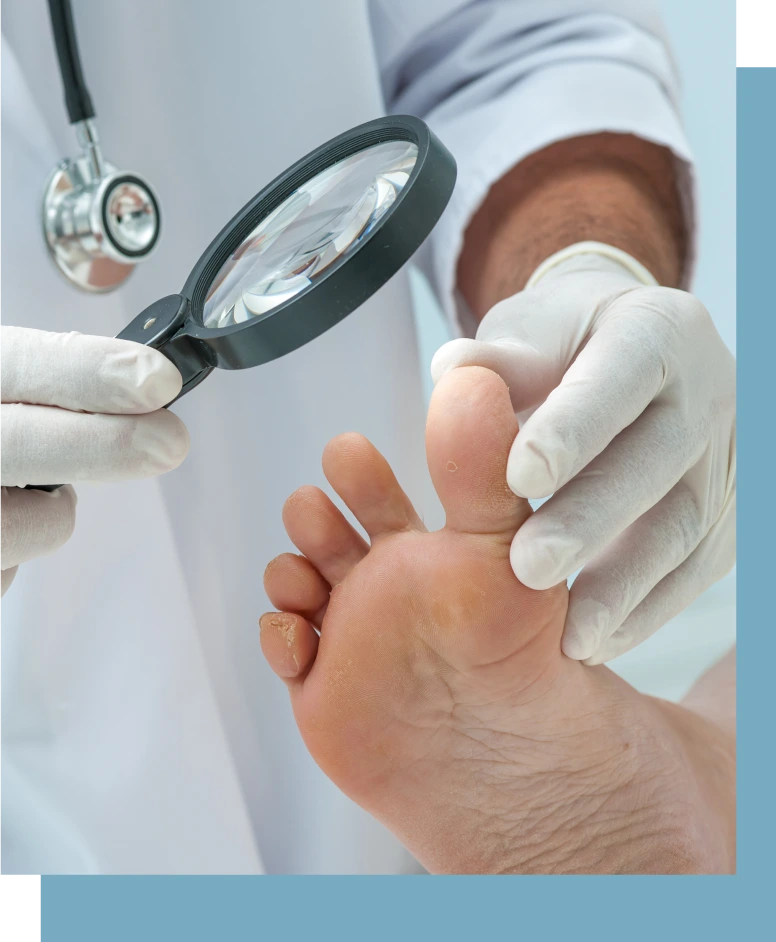
Hallux limitus is restricted upward motion of the big toe. A healthy first MTP joint needs roughly 60–70 degrees of dorsiflexion for a normal toe-off. When bone shape, a long first metatarsal, or early arthritis blocks that motion, the joint jams. Bone spurs form on the top of the joint. The toe starts to look like it has a bump, but the bump is on top, not on the side like a bunion.
Getting the name right changes the surgery, the shoe, and the injection.

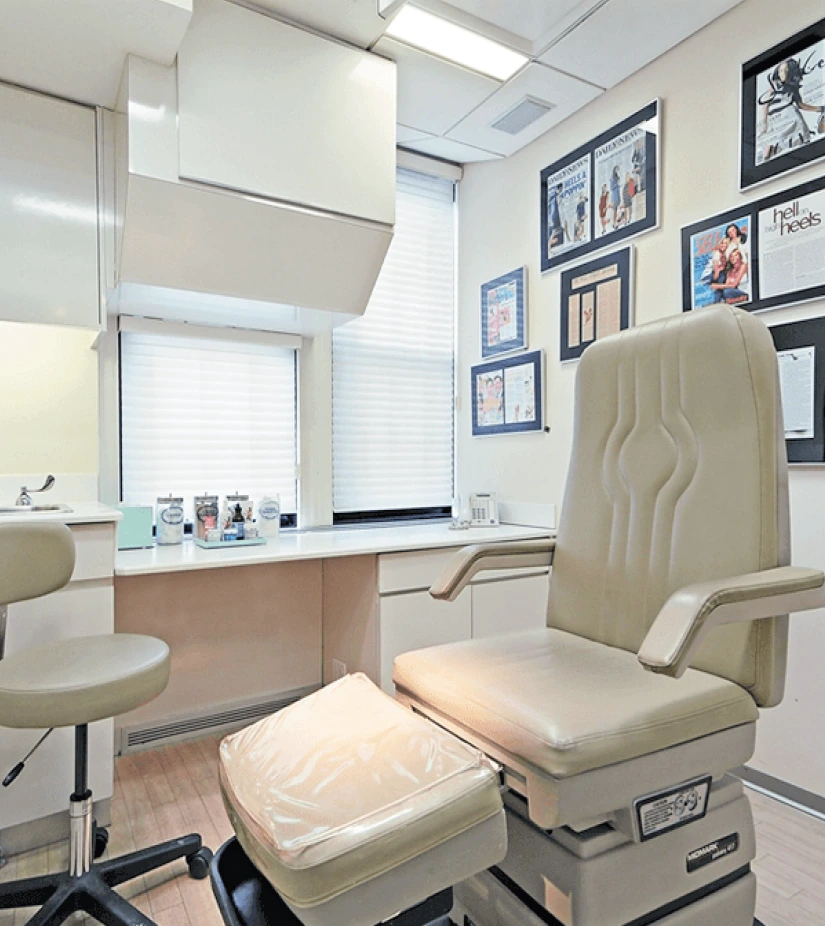
We measure motion, feel for spurs, and watch how you toe off. X-rays show joint space, the shape of the metatarsal, and how far the arthritis has gone. That film is what tells us whether we are still in a limitus chapter or already in rigidus.
A stiffer-soled shoe and a custom orthotic with a Morton’s extension can reduce the jamming. This is unglamorous and effective.
Hyaluronic acid joint lubrication and carefully chosen injections can make a still-viable joint usable again. We do not grind a joint down with repeated cortisone.
Stem cell injections are considered when the cartilage is thinning but the joint is not bone-on-bone.
Dr. Shalot performs procedures that remove the blocking spur (cheilectomy) or shorten/realign a long first metatarsal so the toe can move again. Fusion is reserved for hallux rigidus, not for a joint we can still salvage.
Conservative care has no downtime. After a cheilectomy, most patients are in a surgical shoe for a short period and then back to a stiff-soled regular shoe. Osteotomy recovery is longer. We will not sell you a two-week miracle if the bone needs six.
Evaluation typically $150–$400. Orthotics, lubrication injections, and regenerative procedures are quoted after imaging. Surgical fees depend on whether we are removing a spur or realigning bone. We review insurance against the recommended plan.
Not if the toe is not drifting sideways. The bump location tells the story.
It is already a form of arthritis. The question is whether we can keep it from becoming rigidus.
Often yes, in a shoe with a stiffer forefoot and after we calm the joint. We will test that, not assume it.