


Neuropathic Foot Pain Treatment
in New York, NY

Millennium Podiatry in New York, NY, offers neuropathic foot pain treatment that blends careful diagnosis with high-tech, medically supervised, non-surgical care. Our board-certified podiatrists look for the source of burning, tingling, or numbness and develop a plan that fits your lifestyle. Comfort, mobility, and an active life are the goal.
Five gold stars rating
Based on 137 Google Reviews

Understanding Neuropathic Foot Pain

Neuropathic foot pain starts when the nerves that carry sensation from your feet are damaged, compressed, irritated, or misfiring. Unlike a sprain or bruise, the problem is how the foot reports information, so ordinary pressure can feel sharp, and light touch can feel strange or absent. That is why the same shoe, sidewalk, or morning walk can suddenly feel unpredictable and limit standing, walking, and daily life.
Person holding their foot while experiencing neuropathic foot pain

Common Symptoms

Symptoms can differ in type and intensity and may shift from hour to hour:

Underlying Causes

Neuropathic foot pain can stem from one factor or several at once:
Woman wearing white heels and gray pants walking on a sidewalk

Diagnosis Methods

Accurate diagnosis is the foundation of care. The goal is a precise finding, not a generic label of “foot pain.”
We review when symptoms began, what eases or worsens them, and how they affect walking, work, and sleep. A physical exam assesses sensation, reflexes, muscle strength, and circulation to separate nerve pain from joint or vascular problems.
Specific tests evaluate nerve function. Nerve conduction studies (NCS) and electromyography (EMG) may be used to identify nerve damage and its extent.
X-rays, MRI, or in-office ultrasound may rule out structural issues, swelling, nerve compression, or a neuroma, and assess other conditions affecting the feet.
Lab work can identify systemic contributors such as diabetes, vitamin deficiencies, or autoimmune markers when a medical cause is suspected.
Runner holding ankle in pain while wearing white sneakers outdoors

When to
Seek Medical Help

Do not wait for symptoms to become constant. Early evaluation can prevent further nerve damage and protect skin, balance, and confidence. A referral is not required. Seek care if you notice:

Treatment Options Overview

Care is rarely a single procedure. It is a coordinated, personalized mix that may include medication, protective footwear, custom support, targeted injections, and regenerative options. Some patients improve with conservative steps alone; others need a layered plan that calms nerves, cushions pressure points, and treats related problems, such as heel inflammation or loss of padding.

Medicines can quiet overactive nerve signals and make sleep possible while other therapies take hold. Medication is a tool, not the whole story, and is weighed against side effects and coordinated with your broader medical team.

1. Oral Medications

Antidepressants, antiseizure medicines, and other neuromodulating agents can help modulate pain signals. Anti-inflammatory support may be added when joints and nerves are both involved.

2. Topical Creams and Patches

Lidocaine patches, capsaicin creams, and other topical compounds can numb the area or desensitize nerve endings for localized relief.

Day-to-day relief often comes from changing how force moves through the foot:

  • Custom AI-cast orthotics crafted to align the foot, offload tender nerve pathways, ease pressure, and support a healthier stride

  • Physical therapy, targeted stretching, activity pacing, and supportive shoes to improve strength, flexibility, balance, and coordination

  • Heel comfort injections to reduce inflammation around the heel when it is amplifying nerve compression or pain

  • Pillows for Your Feet fillers to restore shock absorption when fat pads have thinned

When conservative care is not enough, Millennium Podiatry offers medically supervised, non-surgical options planned after a full in-person exam:

  • Stem cell injections to support repair of damaged tissues, encourage healing, enhance mobility, and promote natural regeneration of nerve and surrounding tissues

  • Shockwave therapy, a non-invasive treatment that uses acoustic waves to stimulate healing and reduce pain in chronic heel conditions, including persistent plantar fasciitis with a neuropathic component

Are These Treatments Right for You?

You may be a strong candidate if burning, tingling, numbness, or sharp pain is limiting walks, workouts, workdays, or sleep, and you want a non-surgical path forward. Treatment is also worth exploring if you live with diabetes, have noticed balance changes, or have already tried generic inserts without lasting relief. We welcome patients of all ages, from those protecting a training routine to those who simply want the grocery aisle to feel safe again.

What to Expect During Treatment

Your first visit typically lasts 30 to 45 minutes with a board-certified podiatrist and may include history, exam, and diagnostic tests. More than one concern can be evaluated in the same consult; whether treatment starts that day depends on the exam and the schedule.

Come prepared so the visit stays focused on you:

  • Complete intake forms sent by text before you arrive, or plan to come about 15 minutes early

  • Bring a valid government ID, a credit card, a photo of the front and back of your insurance card, relevant medical records, a medication list, and details of prior foot-pain treatments

  • Wear or bring the shoes you use most, and be ready to describe nights, mornings, and the activities you miss


Your podiatrist outlines a mix of protection, cushioning, medication, regenerative care, and follow-up that fits your goals. Two people with the same diagnosis rarely need the same treatment plan. An athlete may emphasize shock absorption, while someone with diabetic nerve changes may need closer skin care, nail care, and pressure relief.
Nerve symptoms can improve in uneven waves, so follow-up is built in. Return visits recheck sensation, skin, and comfort, then adjust orthotics, injections, or home strategies. Appointment reminders go out one day and one hour beforehand; if a visit is missed, the team follows up so care does not quietly stop.
Most non-surgical approaches allow you to walk out and return to ordinary routines with simple instructions ease mileage, change shoes, protect a treated area, and watch the skin daily if sensation is reduced. If something feels off after a session, call. After hours, you can book a real appointment if a slot is open or leave a complete callback message for the next morning.

Expected Outcomes and Benefits

The aim is not a perfect textbook foot. It is a life in which walking feels like yours again. Results vary with the cause, how long symptoms have been present, and how closely the plan is followed:
Person wearing black heeled pumps, displaying legs and feet against a brick wall background

Preventing Neuropathic
Foot Pain

You cannot always prevent nerve injury, but you can lower the load on vulnerable feet:

Cost of Neuropathic Foot Pain Treatment in New York, NY

Neuropathic foot pain treatment in New York typically ranges from $400 to $3,500, depending on the exam, custom orthotics, injections, or a combined regenerative plan. Pricing varies by provider, anatomy, complexity, and selected therapies. Call for a personalized quote.
Why Patients Choose Millennium Podiatry

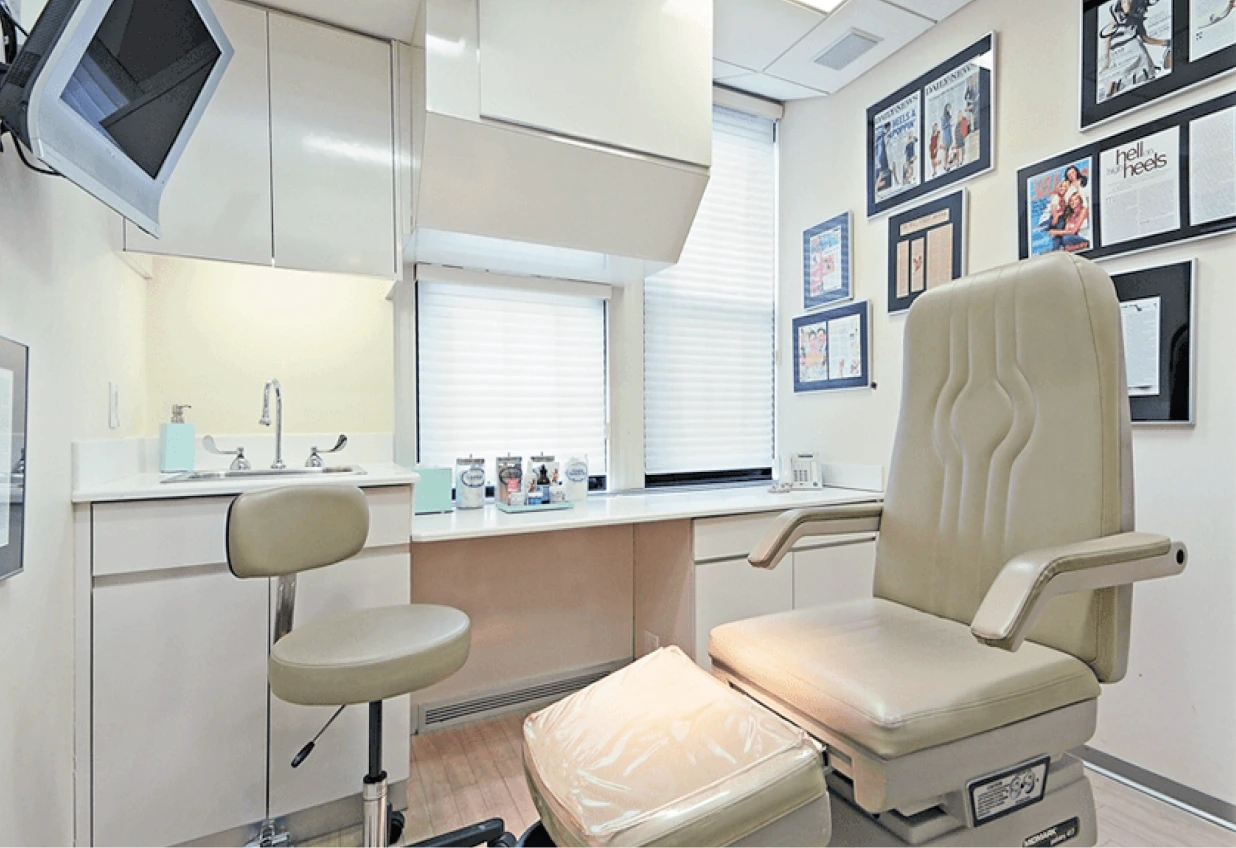
Millennium Podiatry has more than 30 years of experience caring for feet that need both medical judgment and modern tools. Care is led by distinguished board-certified podiatrists. Our practice is known for high-tech, medically supervised, non-surgical solutions that support active lives:
Visit us in person at 885 Park Avenue, Suite 103, New York, NY 10075 (entrance at 103 East 78th Street, second floor). Our team speaks English and Spanish.
Walk Freely Again Banner

Frequently Asked Questions

Do I need a referral to be seen?
No referral is required. If nerve symptoms are interrupting walking, sleep, or sport, you can request a consultation directly.
Bring a valid government ID, a credit card, photos of both sides of your insurance card, relevant medical records, a list of current medications, details of previous foot-pain treatments, and the shoes you use most. Complete the intake forms sent by text before you arrive, or come about 15 minutes early.
A first visit typically lasts 30 to 45 minutes for a history, examination, and a clear discussion of options. Later sessions vary by therapy – some advanced interventions are quicker; physical therapy may run longer. Your plan will outline expected duration.
Millennium Podiatry offers free insurance benefits verification. Dr. Suzanne Levine is an out-of-network provider for most commercial insurance plans. Our office can provide superbills and help submit out-of-network claims; reimbursement is never guaranteed.
Yes. Diabetic foot concerns, including nerve-related discomfort and diabetic nail care, are part of medical podiatry here. Our doctor decides the right plan after an in-person exam.
Many patients are treated with non-surgical, medically supervised options. Surgery is not the starting point for typical neuropathic foot pain care, and any recommendation would follow a full evaluation.
It is not always “curable,” but it is highly manageable. Treatments aim to reduce pain, improve nerve function, and support long-term relief and mobility.

Reviews

346 Total Reviews
Five-star rating displayed with four and a half stars filled

Real people, Real Results

What Our Patients Are Saying

Book a Consultation Today!

Your feet have carried every version of you. If neuropathic pain is asking too much of them, a careful evaluation is the most hopeful next step.