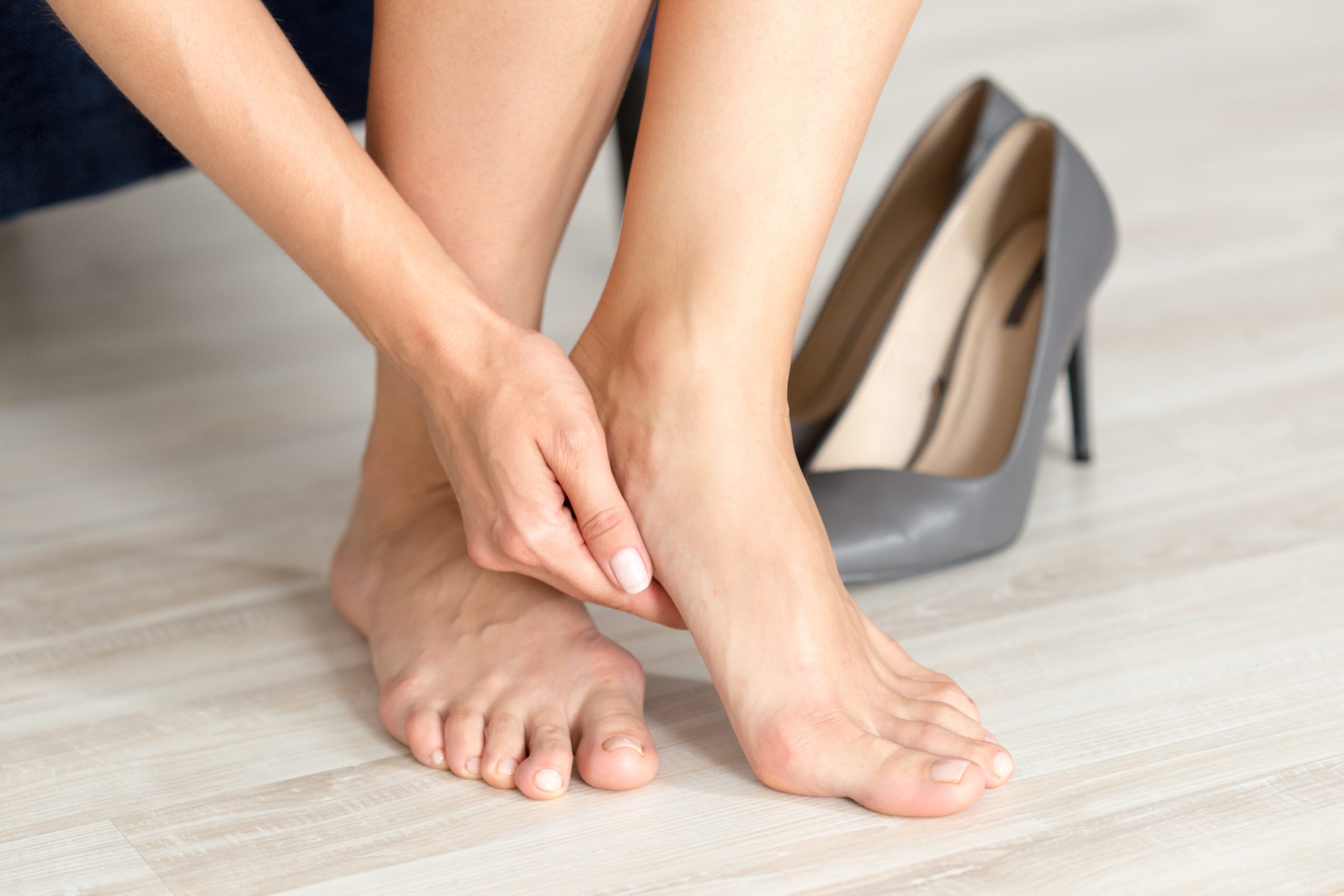
The most important steps for treating a bruised heel are to rest the foot, apply ice to reduce swelling, support the heel with cushioning, and seek a professional evaluation from a podiatrist. While most heel bruises heal on their own with proper care, an accurate diagnosis is crucial to rule out more serious injuries like a stress fracture and to create an effective recovery plan.
In this guide, we explain what causes a bruised heel, how to treat it at home, and when it makes sense to see a podiatrist.
A bruised heel, medically known as a fat pad contusion, is an injury to the soft tissue, fat pad, or bone at the bottom of your heel. It happens when too much force or repeated pressure damages the natural cushioning that protects your heel bone (the calcaneus). The result is a deep ache or sharp pain that often gets worse when you walk or stand.
A bruised heel usually comes from one of two things: a single hard impact or repeated stress over time. Common causes include:
Repetitive high-impact activities: Running or jogging, especially on hard surfaces like concrete or asphalt.
Sudden, hard landings: Jumping from a height onto firm surfaces, common in basketball, volleyball, or from a fall.
Stepping on a sharp or hard object like a rock or curb.
Improper footwear: Shoes that lack cushioning or have worn-out soles.
Walking barefoot on hard surfaces.
A direct blow: Kicking a hard object or having something heavy fall on your heel.
A sudden increase in activity, such as ramping up training too quickly.
Standing for long periods on hard floors.
Thinning heel pad: As we age, the fat pad naturally thins, leaving the heel bone more vulnerable.
People who run, hike, dance, or play court sports are especially prone to bruised heels.
The most common sign is pain in the center or bottom of the heel that feels worse when you put weight on it. You might describe it as a deep ache, a sharp jab, or a feeling like you are stepping on a stone or marble. Other symptoms include:
Tenderness when you press on the heel.
Pain with weight-bearing that worsens with walking, running, or standing.
Relief when resting or staying off the foot.
Mild swelling or warmth around the area.
Visible bruising: A red or purplish discoloration on the bottom or sides of the heel, though it is not always visible.
Our podiatrist begins with a thorough physical examination, reviewing your symptoms, activity levels, and how the injury occurred. We will gently press on different parts of your heel to pinpoint the exact location of the pain and assess your gait.
In many cases, a physical exam is sufficient. However, to rule out other problems like a stress fracture of the calcaneus, bone spurs, nerve issues, or severe plantar fasciitis, imaging tests such as an X-ray or MRI may be recommended. An accurate diagnosis matters because treating the wrong condition can slow your recovery.
Treatment focuses on reducing pressure, controlling inflammation, and allowing the damaged tissue to heal. The approach combines at-home care with professional guidance and, if needed, advanced therapies.
For most people, the RICE method is the foundation of recovery:
Rest: Stay off the injured foot as much as possible. Avoid running, jumping, and prolonged standing. Switch to low-impact activities like swimming or cycling if you want to stay active.
Ice: Apply an ice pack wrapped in a thin towel to your heel for 15 to 20 minutes several times a day.
Compression: Use a snug (but not too tight) elastic wrap to control swelling without cutting off circulation.
Elevation: Prop your foot above heart level when resting to reduce inflammation.
Beyond RICE, a few extra steps help:
Cushioned heel cups or pads placed inside your shoes take pressure off the bruise.
Supportive footwear with good cushioning protects the heel during everyday movement.
Over-the-counter pain relievers may ease discomfort – follow the label directions.
Gentle stretching of the foot and calf can help once the sharp pain begins to fade.
Athletic or kinesiology tape can support the heel and “gather” the fat pad inward to improve its cushioning effect. A common method:
Clean and dry the heel before applying tape.
Anchor a strip of tape around the back of the heel.
Wrap supportive strips around the sides and under the heel in a basket-weave or “X” pattern, gently cupping the fat pad inward.
Avoid wrapping too tightly, which can cut off circulation.
Taping works alongside cushioning and rest. A podiatrist can show you the proper technique or recommend a better support option for your situation.
If at-home care isn’t providing enough relief, professional treatment can help. At Millennium Podiatry, we focus on non-surgical solutions that promote healing and provide lasting relief:
Heel Comfort Injection: Administered directly into the affected area to reduce inflammation at its source and provide significant, lasting pain relief.
Custom Orthotics: Specially crafted insoles that offload pressure, add cushioning, and correct biomechanical imbalances – essential for both treatment and prevention.
Foot Fillers: Known as Pillows For Your Feet®, these restore volume to a thinning fat pad and improve shock absorption.
Stem Cell Injections: An innovative approach that uses the body’s natural healing mechanisms to repair damaged soft tissues and improve mobility – useful for chronic foot pain or stubborn injuries.
Dr. Suzanne Levine focuses on advanced, non-surgical solutions that fit active lifestyles, helping you get back to walking, running, and moving comfortably.
When walking hurts too much, the priority is to reduce weight on the heel:
Limit weight-bearing and stay off your feet as much as possible.
Use cushioned heel cups or pad the shoe to soften each step.
Consider crutches for a few days to completely remove pressure and speed up early healing.
Wear supportive, cushioned footwear at all times, even indoors, instead of going barefoot or wearing flip-flops.
Take shorter, slower steps to lower the force on your heel.
If you cannot put any weight on the foot at all, this may signal a more serious injury and should be evaluated promptly.
Recovery time varies with severity and how diligently you follow your treatment plan:
Mild bruises: May feel significantly better within a few days to one or two weeks.
Moderate to severe (or bone) bruises: Can take three to six weeks, or longer.
Returning to high-impact activity too soon is one of the most common reasons a bruised heel lingers. If your pain has not improved after a couple of weeks, a professional evaluation is a smart next step.
Schedule a consultation with a podiatrist if you experience:
Severe pain that does not improve with rest and ice.
Inability to put weight on the foot.
Pain that lasts longer than one to three weeks of consistent home care.
Significant swelling, redness, or warmth that gets worse, or signs of infection, such as fever.
Numbness or tingling in the foot.
A heel injury alongside diabetes or poor circulation.
If you are unsure what to do for a bruised heel that is not getting better, you can book an appointment or call (212) 535-0229.
Once your heel has healed, the focus shifts to prevention:
Wear cushioned, supportive shoes with good arch support, suited to your activity.
Replace worn footwear before the soles lose their padding.
Use custom orthotics if you have flat feet, high arches, or thin heel padding.
Increase activity gradually instead of jumping into intense workouts.
Warm up and stretch your calf muscles before exercise.
Maintain a healthy weight to reduce force on your heels.
Avoid hard surfaces – run or walk on softer surfaces like a track, grass, or a treadmill.
A bruised heel is a common injury caused by impact or repeated pressure on the fat pad that protects your heel bone. Knowing what to do for a bruised heel – resting, icing, cushioning, and protecting the foot – helps most people recover within a few weeks.
If pain is severe or does not improve, our team at Millennium Podiatry offers advanced, non-surgical options like heel comfort injections, custom orthotics, foot fillers, and stem cell injections to relieve pain and support healing. With the right care and a little patience, you can move past the pain and get back on your feet comfortably.

About the Author
Dr. Suzanne Levine
Named one of America’s Top Podiatrists and is one of the most internationally acclaimed podiatrists in the industry.

June 23, 2026